The New Rules of Wedding Guest Dressing
How dress codes evolved from rigid formality to self-expression—and what that means for your next invitation.
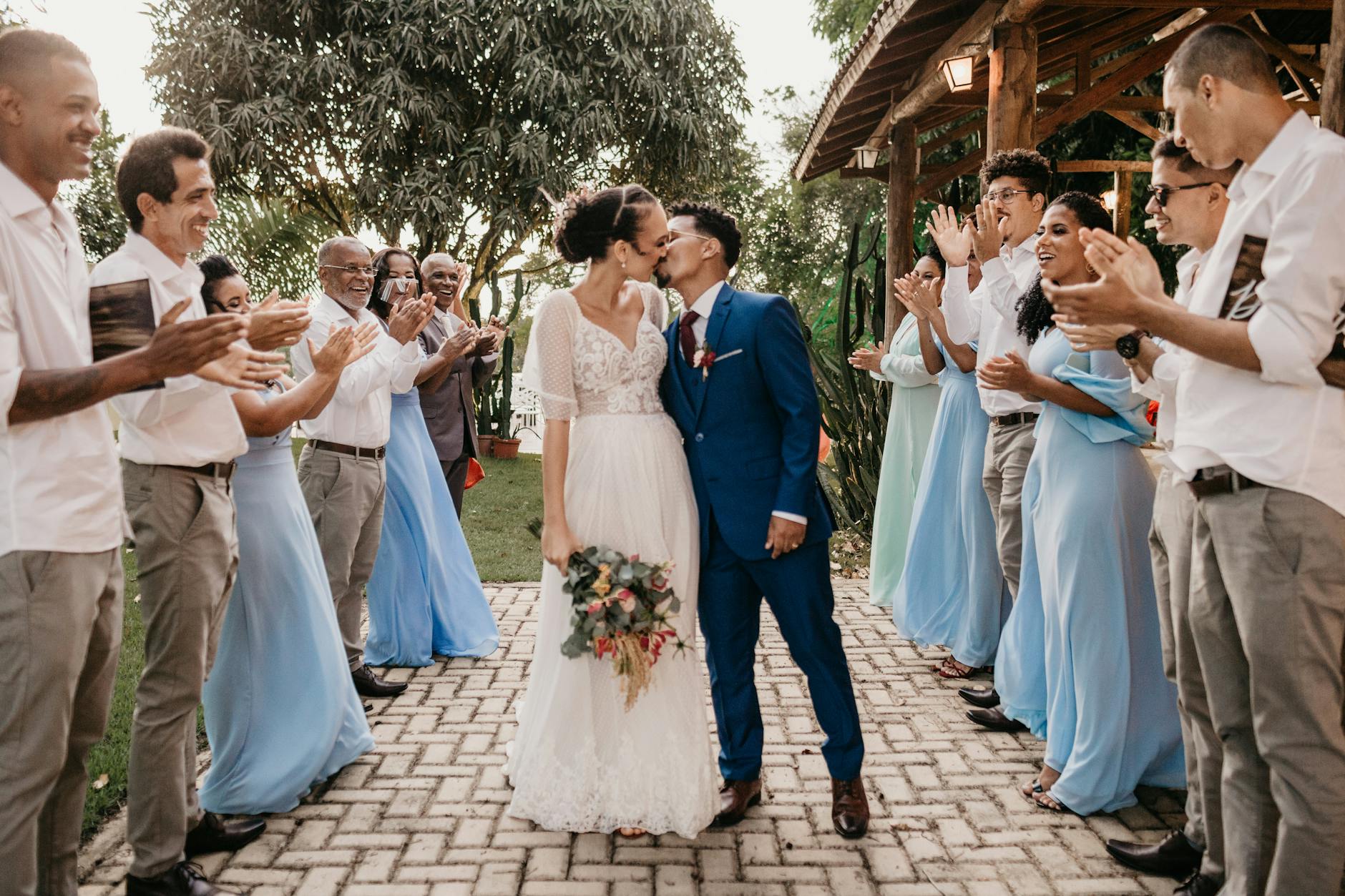
The Death of the Uniform Guest
Twenty years ago, wedding guest attire followed a script: women in pastel cocktail dresses, men in navy suits, everyone careful not to outshine the bride. Today's invitations tell a different story. From black-tie optional to "festive attire" to the wonderfully vague "dress to impress," the modern wedding guest dress code has become less about conformity and more about personal interpretation.
The shift didn't happen overnight. It mirrors broader changes in how we dress for everything—the casualisation of office wear, the rise of individual style over trend-chasing, and a generation that values authenticity over arbitrary rules. Wedding guests now arrive in everything from Jacquemus's sculptural minidresses to The Row's monastic tailoring, and hosts are increasingly encouraging it.
From Black-Tie Rigidity to Creative Black-Tie
Traditional dress codes haven't disappeared; they've simply become more elastic. "Black-tie" once meant floor-length gowns and tuxedos, full stop. Now it's an invitation to play within elevated parameters. A sharply cut trouser suit in silk faille reads as formal as any gown. Khaite's liquid slip dresses occupy the same sartorial register as more ornate options, proving that restraint can be its own form of occasion dressing.
This evolution extends beyond silhouette to colour. The old guard of safe neutrals and garden-party pastels has given way to guests in head-to-toe red, forest green velvet, even—gasp—white (when explicitly permitted). The only remaining universal rule? Don't wear a wedding dress. Everything else has become negotiable.
What "Cocktail Attire" Actually Means Now
The most elastic category of all, cocktail attire has expanded to accommodate:
- Tailored separates: A silk Totême blouse with wide-leg trousers carries the same weight as a dress
- Midi and mini lengths: No longer relegated to daytime-only status
- Texture over embellishment: Interesting fabrication (bouclé, satin, textured knits) does the work that beading once did
- Statement accessories: Bold jewellery or a sculptural bag can elevate simpler silhouettes
- Considered sneakers: For garden or destination weddings, luxury trainers have earned their place
The modern wedding guest dress code here isn't about formality level—it's about intentionality. A well-chosen midi skirt and knit can read as more appropriate than an ill-fitting cocktail dress.
The Rise of Destination and Theme-Specific Codes
As weddings have become more personalised, dress codes have followed suit. Destination celebrations in particular have rewritten the rules. A clifftop ceremony in Puglia calls for different considerations than a hotel ballroom in London—linen suits and flat sandals suddenly make sense in ways they never would at a city wedding.
Theme-specific requests ("garden party chic," "modern romance," "coastal formal") represent hosts attempting to communicate vibe rather than rigid requirements. These nebulous terms actually offer more freedom, allowing guests to interpret through their own style lens. The challenge, of course, is decoding what the couple actually envisions. When in doubt, consider the venue and time of day before the adjectives on the invitation.
Dressing for the Wedding You're Actually Attending
The most significant shift in modern wedding guest dress code thinking is contextual awareness. Rather than defaulting to a universal "wedding outfit," savvy guests now consider:
The couple's aesthetic: A minimalist couple probably isn't hoping for ruffles and sequins, just as bohemian hosts might find stark tailoring too severe.
The venue's architecture: Brutalist spaces call for clean lines; historic estates can handle more romantic silhouettes.
Your role: Close family and wedding party members typically skew slightly more formal than casual friends.
Practical realities: Outdoor weddings demand stable footwear. Destination events require packable fabrics. Religious ceremonies may require covered shoulders.
This approach treats wedding guest dressing as a creative brief rather than a restriction—a chance to respond thoughtfully to a specific moment rather than reaching for a generic solution.
The Wardrobe Investment Shift
Perhaps the most practical outcome of these evolving codes: guests are buying fewer single-use dresses and investing in versatile pieces that work across multiple contexts. A well-cut blazer, elegant trousers, and a rotation of silk tops can be reconfigured for various dress codes. Rental services have also normalised wearing high-impact pieces without the commitment, making it easier to dress appropriately for truly formal events without wardrobe dead weight.
The modern wedding guest understands that the goal isn't to fade into the background or follow a prescribed uniform. It's to look like the best version of yourself—polished, considered, and appropriate to the celebration at hand. That's a rule worth keeping.


