The New Power Suit Is Fuchsia: Dopamine Dressing at the Top
How the ultra-wealthy are wielding Valentino pink, Bottega green, and Hermès orange as psychological armor—and why their wardrobes have never been brighter.
The Serotonin Set
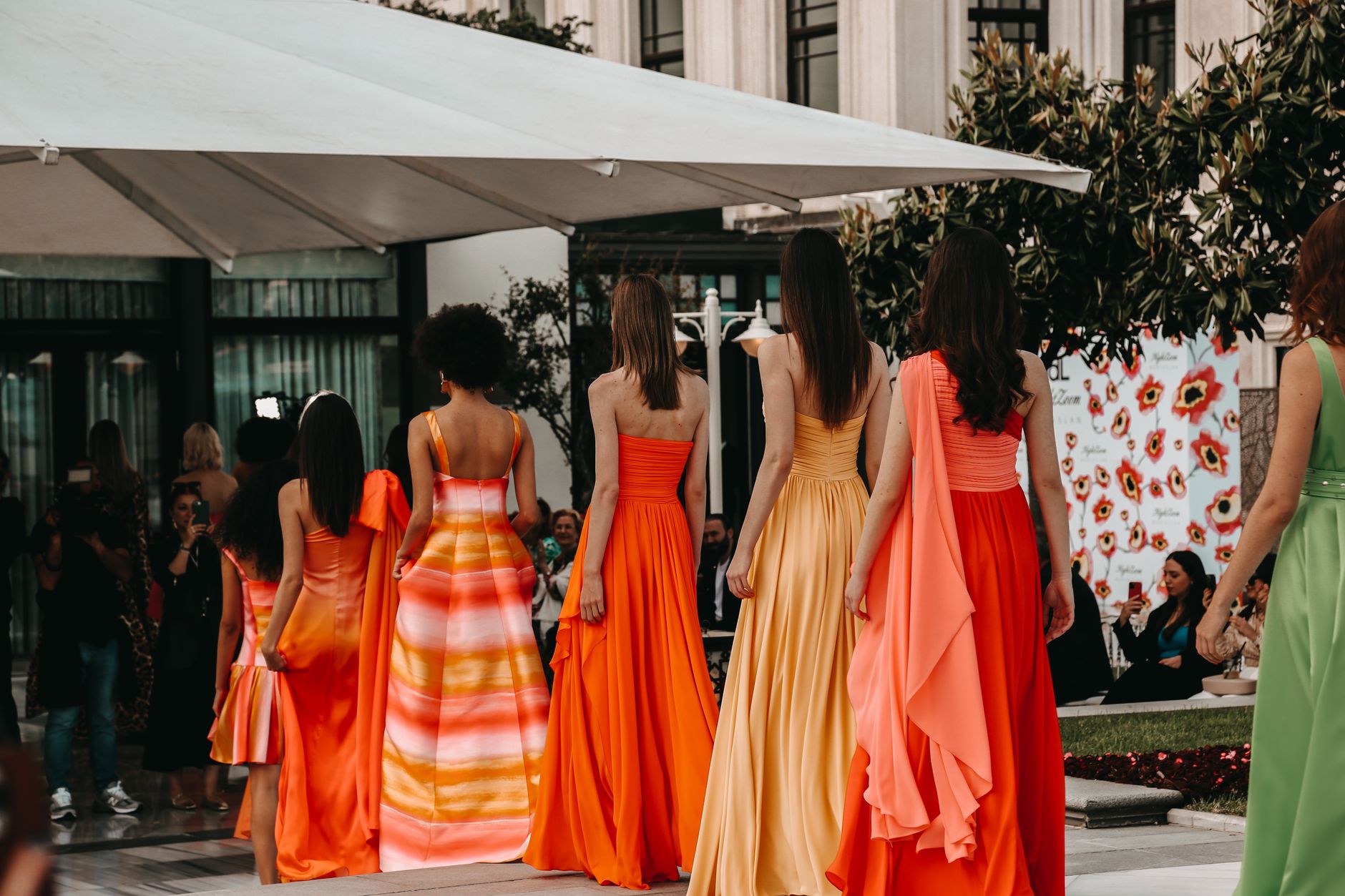
When dopamine dressing luxury entered the lexicon via fashion psychologist Dawnn Karen in 2020, it was framed as democratic self-care: wear yellow, feel better. Four years later, the concept has been quietly annexed by the ultra-wealthy, who've turned mood-boosting color into a six-figure statement. At spring trunk shows from Paris to Palm Beach, personal shoppers report the same phenomenon: clients who spent decades in Loro Piana beige are now requesting cobalt, saffron, and electric violet. It's not whimsy. It's strategy.
The difference between mass-market dopamine dressing and its luxury iteration isn't just price point. It's intention. Where the former uses color as emotional scaffolding, the latter deploys it as social signaling. A Bottega Veneta Parakeet intrecciato tote doesn't just spark joy; it announces you're fluent in Daniel Lee's tenure, that you understand the brand's pivot from quiet luxury to assertive craft. A Valentino Pink PP blazer telegraphs you were paying attention during Pierpaolo Piccioli's final collections, that you recognize a cultural moment in real time.
Color as Cognitive Currency
The psychology underpinning dopamine dressing luxury is more complex than retail therapy. Research from the University of British Columbia suggests that color affects cognitive performance: blue enhances creativity, red sharpens attention to detail. Luxury consumers, particularly those in finance, tech, and creative industries, are increasingly treating their wardrobes as neurological tools. One London-based wealth manager told The Financial Times she wears a specific shade of coral to quarterly board meetings because it "reads as confident without reading as aggressive."
This isn't chromotherapy cosplay. It's the logical extension of a class that's always understood dress as language. Where previous generations used Savile Row tailoring or Chanel tweed to communicate stability and discretion, today's wealthy are leveraging color theory to convey:
- Emotional intelligence: the self-awareness to acknowledge mood as a professional asset
- Cultural capital: familiarity with fashion's intellectual frameworks (see: Karen's work, the Pantone Institute, exhibition histories at the Met Costume Institute)
- Risk tolerance: the confidence to stand out in rooms that reward conformity
- Craft literacy: understanding that achieving true saturation in cashmere or silk requires exceptional dye technique
The irony, of course, is that what began as accessible self-expression has become another axis of exclusivity. Achieving dopamine-worthy color in luxury materials is technically difficult and therefore expensive. Hermès orange, for instance, requires specific mordants to penetrate box calfskin without compromising suppleness. Loro Piana's saturated jewel tones in baby cashmere involve dye lots small enough that shade consistency between seasons is never guaranteed.
The Chromatic Arms Race
The brands responding most intelligently to dopamine dressing luxury aren't those churning out novelty brights. They're the houses that understand color as an extension of material mastery. Brunello Cucinelli's recent palette expansion into dusty rose and sage isn't pandering; it's demonstrating that their dye works can handle subtlety at scale. The Row's occasional forays into camel or slate blue feel like events precisely because they're rare, making each piece more covetable.
Then there's the archive market, where dopamine dressing has sparked a run on Eighties and Nineties pieces in saturated hues. Yves Saint Laurent's jewel-tone Le Smoking variants, once considered too loud for investment dressing, are now moving at auction for multiples of their estimates. Vintage Chanel in canary yellow or cobalt, previously dismissed as "costume-y," is being rehabilitated as forward-thinking.
What's notable is the demographic spread. This isn't just young tech wealth experimenting with personal brand. Established collectors in their fifties and sixties are requesting color for the first time, often citing pandemic-era reappraisal of what discretion actually means. If the past decade was defined by stealth wealth, the current moment asks: why hide?
Beyond the Buzz
The staying power of dopamine dressing luxury will depend on whether it evolves beyond trend cycle logic. Early signs suggest it might. Unlike logomania or athleisure, color psychology offers enough conceptual depth to sustain long-term engagement. It's also infinitely adaptable: every season brings new shades, new material applications, new cultural references.
The risk is commodification. As more brands adopt the language of mood-boosting color without the craft to back it up, the concept could flatten into marketing speak. But for now, watching luxury consumers treat their closets as both palette and psychology lab feels like a genuinely new development. Not because color is new, but because the explicitness is. For the first time in decades, the wealthy are willing to admit their clothes are working on them as much as they're working their clothes.