Five Boutique Hotels That Teach You How to Dress
From the Cotswolds to Copenhagen, the interiors philosophies of design-driven properties offer surprisingly wearable lessons in personal style.

The Wardrobe Lesson Hidden in Your Hotel Room
The best boutique hotel design inspiration doesn't announce itself with a lobby chandelier or a signature scent. It's quieter than that: the way natural linen is left to wrinkle on a four-poster, the edit of three perfect objects on a nightstand, the confidence to pair 18th-century panelling with a Murano glass lamp from 1968. These are the same instincts that make someone's wardrobe feel considered rather than assembled, and the most compelling small hotels understand it intuitively.
Here are five properties where the design philosophy translates directly to how you might approach getting dressed.
Heckfield Place, Hampshire
This Georgian estate an hour from London operates on a principle that's become rare in fashion: slow luxury. Everything here is made to last or allowed to age beautifully. The linens are woven on-site, the furniture is restored rather than replaced, and the palette is drawn from the surrounding woodland, not a trend forecast.
The style lesson is about investment and patina. Heckfield's approach mirrors the way a well-made trench coat or a pair of Church's brogues improves with wear. The boutique hotel design inspiration here is less about acquiring and more about living with things long enough that they become yours. In practice, that might mean choosing the cashmere crewneck that will pill gently over five winters rather than the one that looks flawless for six months.
What to borrow:
- A neutral base (stone, cream, charcoal, olive)
- One or two pieces with visible craftsmanship (hand-stitching, natural dyes, visible grain)
- The confidence to let things look lived-in
Hotel Castello di Reschio, Umbria
Count Antonio Bolza spent 25 years restoring this 11th-century castle, and his interiors feel like the sartorial equivalent of sprezzatura: studied nonchalance. Faded frescoes sit alongside contemporary Italian furniture. A 1970s Murano chandelier hangs in a medieval tower. Nothing matches, but everything belongs.
This is boutique hotel design inspiration for anyone who's ever worried about "rules." Reschio proves that a vintage Hermès scarf works with a Comme des Garçons blazer if the proportions and confidence are right. The common thread isn't era or price point but a commitment to things that feel authentic to you, not to a mood board.
What to borrow: The ability to mix high and low, old and new, without announcing it. A signet ring with a Uniqlo turtleneck. A 1960s overcoat with new-season Lemaire trousers.
SP34, Copenhagen
This 118-room hotel in the Latin Quarter distills Danish design into something you can actually live with: warm minimalism. The palette is soft grey, rust, and pale oak. The furniture is functional but never austere. There are enough textures (bouclé, linen, brushed brass) to keep the rooms from feeling cold.
The lesson here is about editing without sacrificing warmth. It's the difference between a capsule wardrobe that feels like a uniform and one that feels like a signature. SP34's interiors suggest that you don't need twelve pairs of trousers, but the three you do own should be in different fabrics and cuts.
What to borrow: A tight colour palette (three neutrals, one accent), varied textures within that range, and the discipline to stop before you've said too much.
Fife Arms, Braemar
This Scottish coaching inn, reimagined by Iwan and Manuela Wirth, is maximalism with a backbone. Every surface is layered with art, tartans, taxidermy, and Victorian curiosities, but the underlying structure is rigorous. The wallpapers are custom. The plaids are historically accurate. The eclecticism is curated, not accidental.
The boutique hotel design inspiration here is for anyone who loves pattern, colour, and ornament but worries about looking chaotic. The Fife Arms proves that you can wear a Fair Isle knit, a checked scarf, and a tweed jacket in the same outfit if the colours are calibrated and the fit is sharp. The maximalism is the decoration; the discipline is the foundation.
What to borrow: The courage to layer pattern and texture, but only after you've established a strong silhouette and a coherent palette.
Parister, Paris
This 44-room hotel near Montmartre takes Parisian style and strips it of cliché. The interiors, by Festen Architecture, are graphic and precise: black and white with shots of brass and blush. The furniture is sculptural. The details are unexpected (a curved headboard, a hexagonal mirror), but never fussy.
The lesson is about clarity and proportion. Parister's rooms prove that a simple outfit (white shirt, black trousers, good shoes) can be arresting if the cut is right and the details are deliberate. It's boutique hotel design inspiration for the wardrobe you return to when you're tired of trying too hard.
What to borrow: A strong, simple base and one or two architectural details (an interesting collar, an asymmetric hem, a sculptural bag) that give it shape.
Pack Accordingly
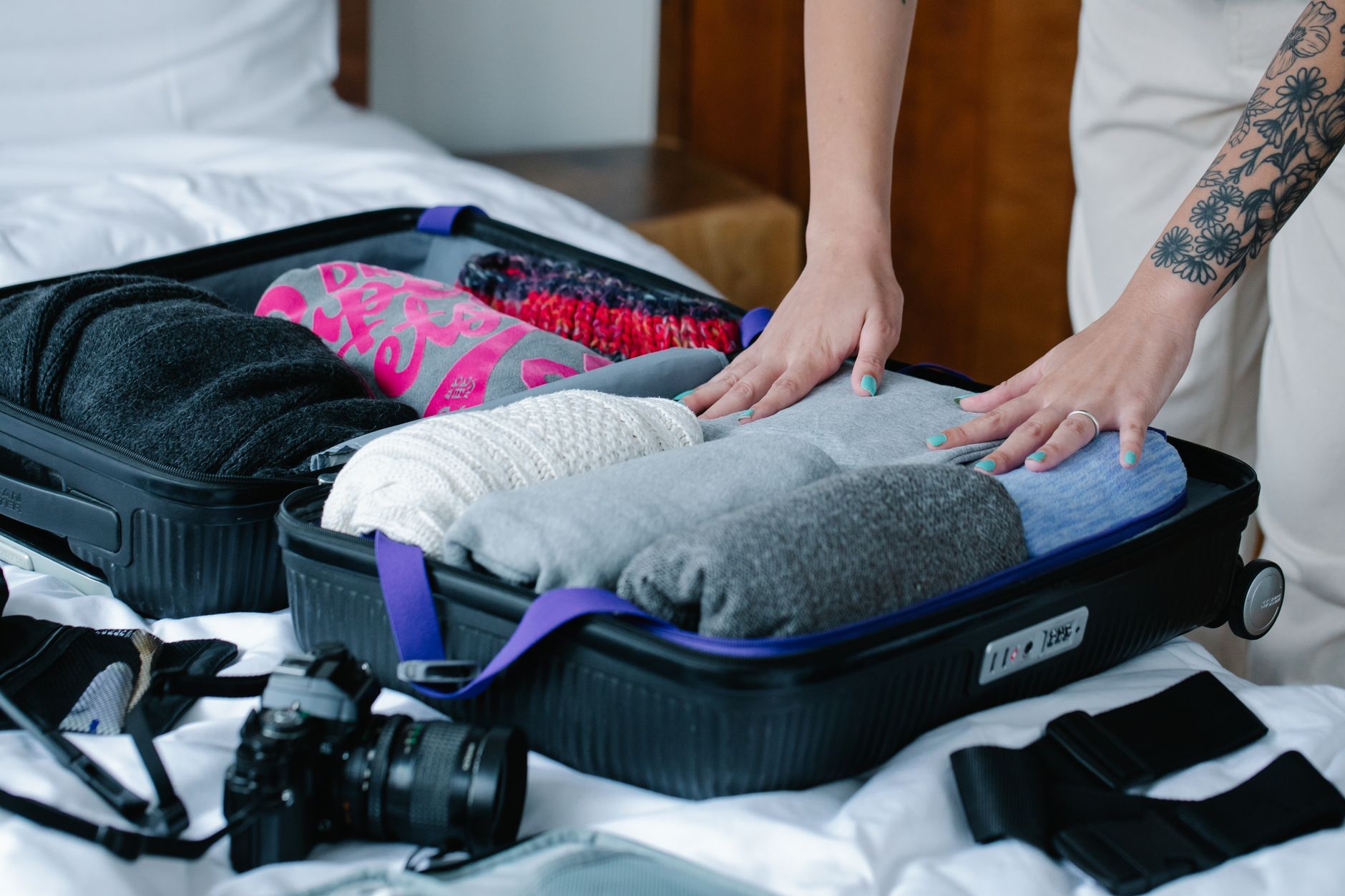
The through-line in all five properties is the same thing that makes a wardrobe feel coherent: a clear point of view, the confidence to edit, and the patience to let things develop over time. Whether you're drawn to Heckfield's slow craft or Parister's graphic precision, the best style lessons are the ones you can carry home in your suitcase.